William M‘Kim — Renton photographer

on May 14, 2021

William M‘Kim was born in 1883 in the village of Renton in the Vale of Leven where his father was postmaster. He was apprenticed as a draughtsman. Early in his life he and his younger brother David, developed an interest in photography that led to the production of postcards, mainly of scenes around his native village. “The Renton” as it is known was a thriving centre for the bleaching and dyeing industry. Renton from the lower slopes of the Carman hill, looking to Dumbarton and showing the chimneys of Dalquhurn works around 1908. The railway station is on the extreme right. Renton from the west looking down King Street to Renton Cross around 1908. In the foreground are the houses of Back Street and beyond those of the Main Street. Across the River Leven are the policies of the Strathleven estate. Renton Main Street with the tramline to Loch Lomond. Renton from further north on the...

Loch Lomond Frozen—1895

on Apr 22, 2021

In the first week of January 1895, the West of Scotland experienced a severe frost and the southern reaches of Loch Lomond began to freeze. This phenomenon was not unknown or particularly unusual. It had last frozen over in the winter of 1880-81 and indeed the year before that, on both occasions bearing the weight of a person for several weeks. It is the broad, shallower, southern stretch of the loch that is susceptible to freezing, the narrow, fijord-like northern arm is too deep. Freezing as far as Luss was not considered possible, but the frost of January and February 1895 proved this wrong. “King frost on his throne.—(from our Glasgow Correspondent) Glasgow, Wednesday Forenoon. The frost in Glasgow and the West of Scotland to-day is the greatest for years and Loch Lomond is frozen for the first time for twelve years. There is still no communication between Glaagow and the West...

The Port of Ayr

on Apr 12, 2021

The town of Ayr is the lowest bridging point on the river of the same name and the bridges gained renown through Burns’ poem “The brigs of Ayr,” where the old bridge predicts the demise of its newer downstream neighbour. Indeed the new bridge was damaged irreparably in a flood in 1877 and replaced a year later. The old bridge with the new bridge behind around 1870 The old bridge itself was in danger of collapse around 1900, but its association with Burns was its salvation and remedial work was carried out in 1904. Renovations to the old bridge in 1904 The bridges also mark the extent of the harbour of Ayr, stretching downstream from the bridges to the Firth of Clyde. The Railway reached the town of Ayr in 1840 and connections with the harbour were made initially to the north bank of the river in 1878 when a wet dock, named the Griffin Dock, was opened, complete with coal drops. A...

Early Gareloch Steamers—Part 2

on Apr 2, 2021

In a previous article, the early development of the Helensburgh and Gareloch steamers was outlined. By 1843, Helensburgh, a popular summer watering place with the wealthier residents of Glasgow, was beginning to develop as a year-round residence from which there was a steady business traffic. The burgh pier was, however, problematic. The Gareloch, long a pastoral backwater, was attracting feuars, few at first, but adding to the local residents and the traffic in agricultural produce and the movement of animals. The two main lines of steamboats; the Shandon & Glasgow Steam Packet Co., with the Superb, and Messrs Henderson & M‘Kellar with the British Queen, Sultan, and the new Emperor, competed for the traffic sailing from Glasgow and connecting with Greenock. The Greenock Railway, opened in 1841, attracted some traffic with the steamboats Dumbuck and Royal Victoria, connecting...

Rhu or is it Row?

on Mar 24, 2021

The village of Row at the entrance to the Gareloch owes its origins to the adjacent Gareloch narrows, a convenient if treacherous crossing point for people, goods and cattle. The Parish of Row encompasses the east shore of the Gareloch and was formed in 1648 when the M‘Aulays of Ardencaple built a church. The present building dates from 1851, and dominates the village that grew up around it. Early volumes of Hugh MacDonald’s “Days at the Coast” provide an engraving of the village in the late 1850s. The village is surrounded by large houses, many built for summer residences by the wealthy members of Glasgow society. Row Early photographs also feature the church. Editions of MacDonald’s book from around 1868 contain albumen photographs by Thomas Annan. A photograph by Beckett shows almost the same scene. Row village (Annan) Row village (Beckett) The ferry between Row point and Roseneath...

Early Gareloch Steamers

on Feb 17, 2021

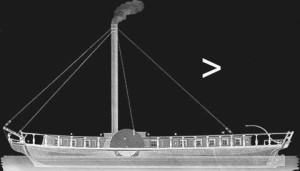
Although the pioneer steamboat on the Clyde, Comet, was placed on the river by the owner of the Bath’s Hotel in Helensburgh, the steamboat ran from the Broomielaw to Greenock. To get the additional distance from Greenock to Helensburgh, a sailing packet was required. Regular steamboat service to the north bank of the estuary began in 1815 with the Joint Stock Company in Dumbarton that provided the steam-boat, Duke of Wellington, to run between that town and the Broomielaw. By that time the steam boats Prince of Orange, Captain M‘Innes, and Princess Charlotte, Captain Duncan, and Clyde, Captain M‘Kenzie, every lawful day on the busy route to Greenock extended their sailings to include Helensburgh. Two years later, on May 26, 1817.—“The Marion steamboat will commence sailing to-morrow for Greenock and Helensburgh, and every lawful day at 8 o’clock morning and on Saturday evening at 6...